 oirae Moss
14 July 2026, 3 min read
10 Unexpected Textures for Gel Plate Printing
The gel plate is an incredible tool for capturing the hidden textures of the world around us. When it comes to building rich, grungy, and abstract layers, the best tools are rarely found in an art supply store. From the delicate threads of vintage lace to the harsh lines of corrugated cardboard and mesh fruit bags, ordinary materials can completely transform a piece. Today, I'm sharing 10 of my absolute favorite unconventional items to build striking depth, spontaneous patterns, and unique character in my gel prints.
1. Lace and Textured Fabrics
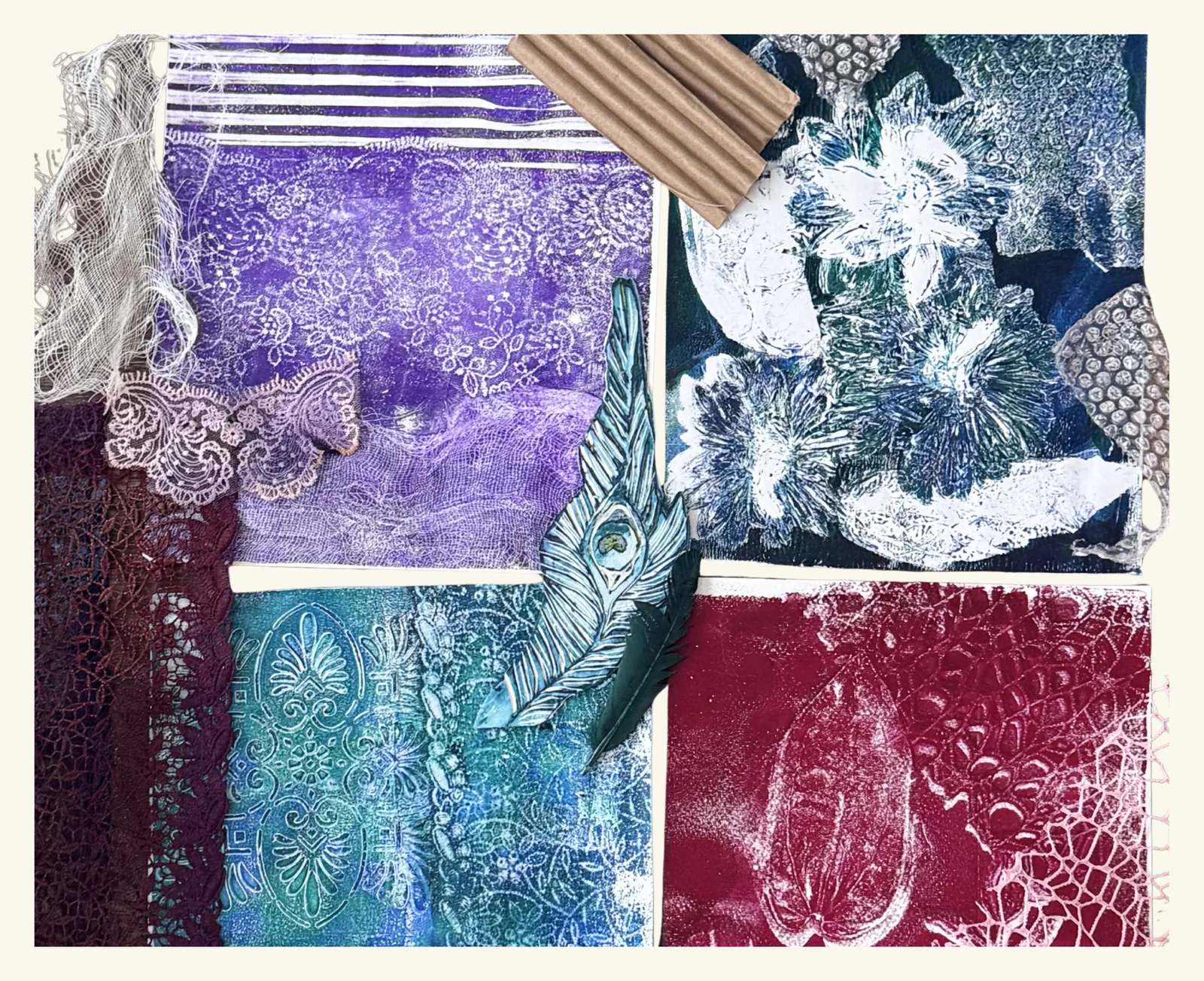
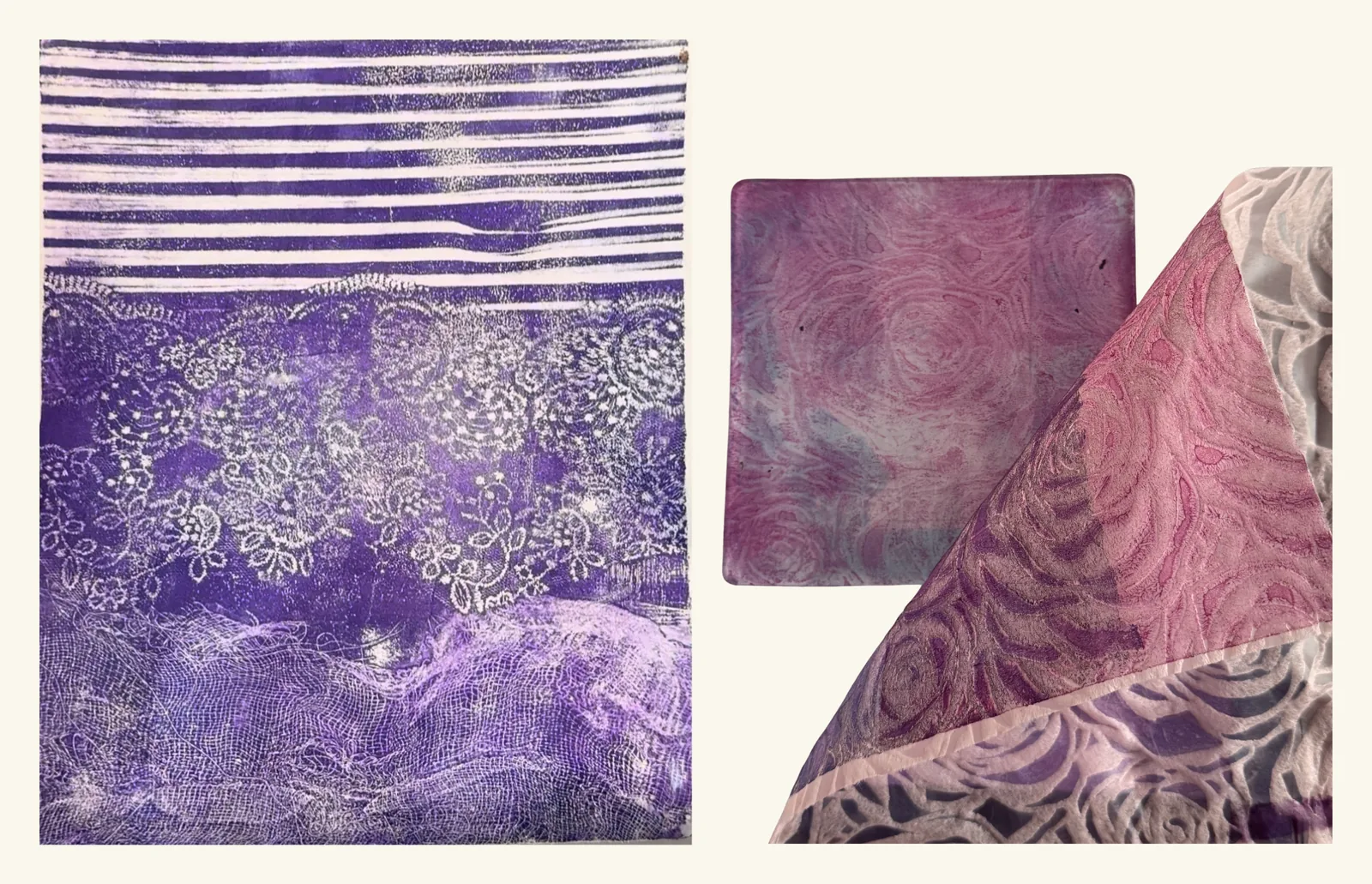
This is easily one of my favorite and most frequently used materials in my creative practice. A piece of vintage lace can instantly transform a simple color background into a complex, romantic piece filled with rich ornamentation.
2. Corrugated Cardboard
One of my absolute favorite techniques is using pieces of cardboard - specifically the exposed, ribbed inner layer of shipping boxes. You can use it like a stamp, pressing it vertically, horizontally, or even cross-hatching the lines to create a complex, geometric, and highly abstract effect.
3. Bubble Wrap
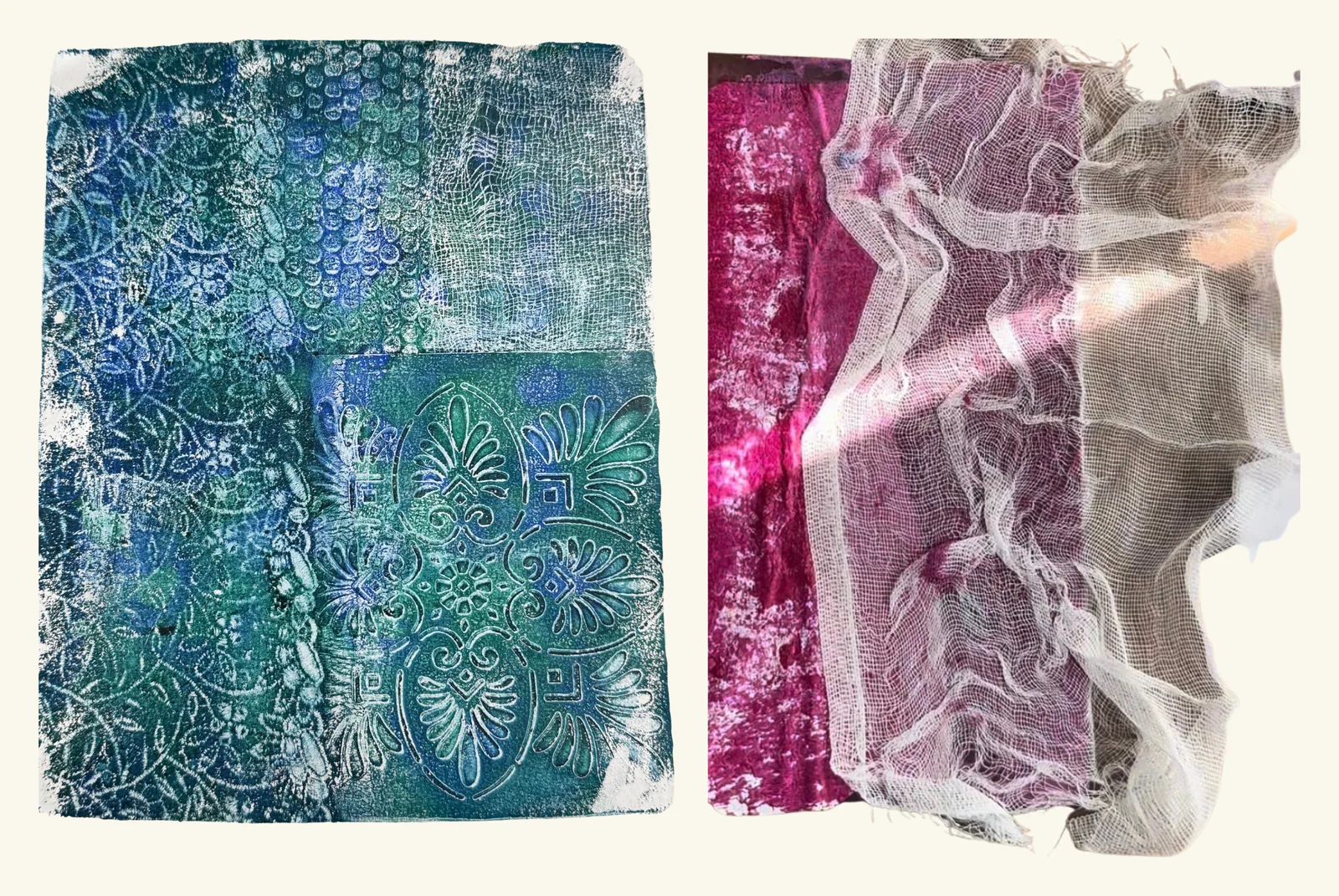
I adore using bubble wrap in my work! It comes in various bubble sizes and is an incredibly versatile material that instantly breaks up flat areas of color, adding a perfect geometric contrast to more organic shapes.
4. Medical Gauze
Gauze is an extremely adaptable and forgiving material. I highly recommend distorting it before placing it down - stretch it out, pull some holes into it, and let the loose threads fray. Embracing this chaotic, deconstructed look adds a wonderful grunge and abstract feel to the print.
5. Mesh Fruit Bags
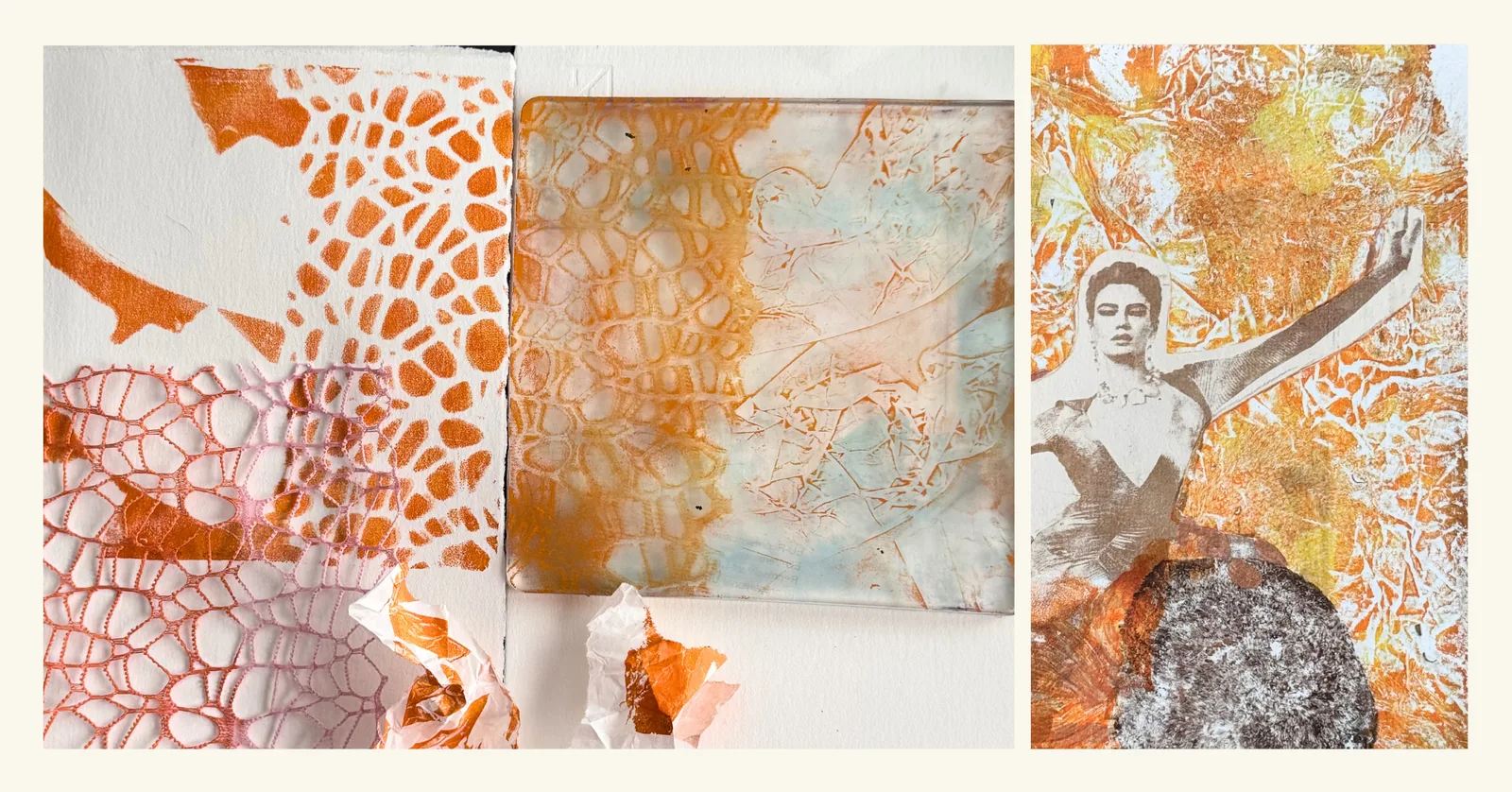
Don't throw away the mesh bags from lemons or garlic! They are fantastic for creating a honeycomb or grid-like effect on the gel plate. They stretch easily and make an amazing, subtle background texture.
6. Crinkled Rice Paper
While any type of paper can yield interesting results, crinkled rice paper is pure magic. When you fold, crumple, and press it onto the plate, it creates beautiful, organic creases that mimic cracked earth or delicate marble veins.
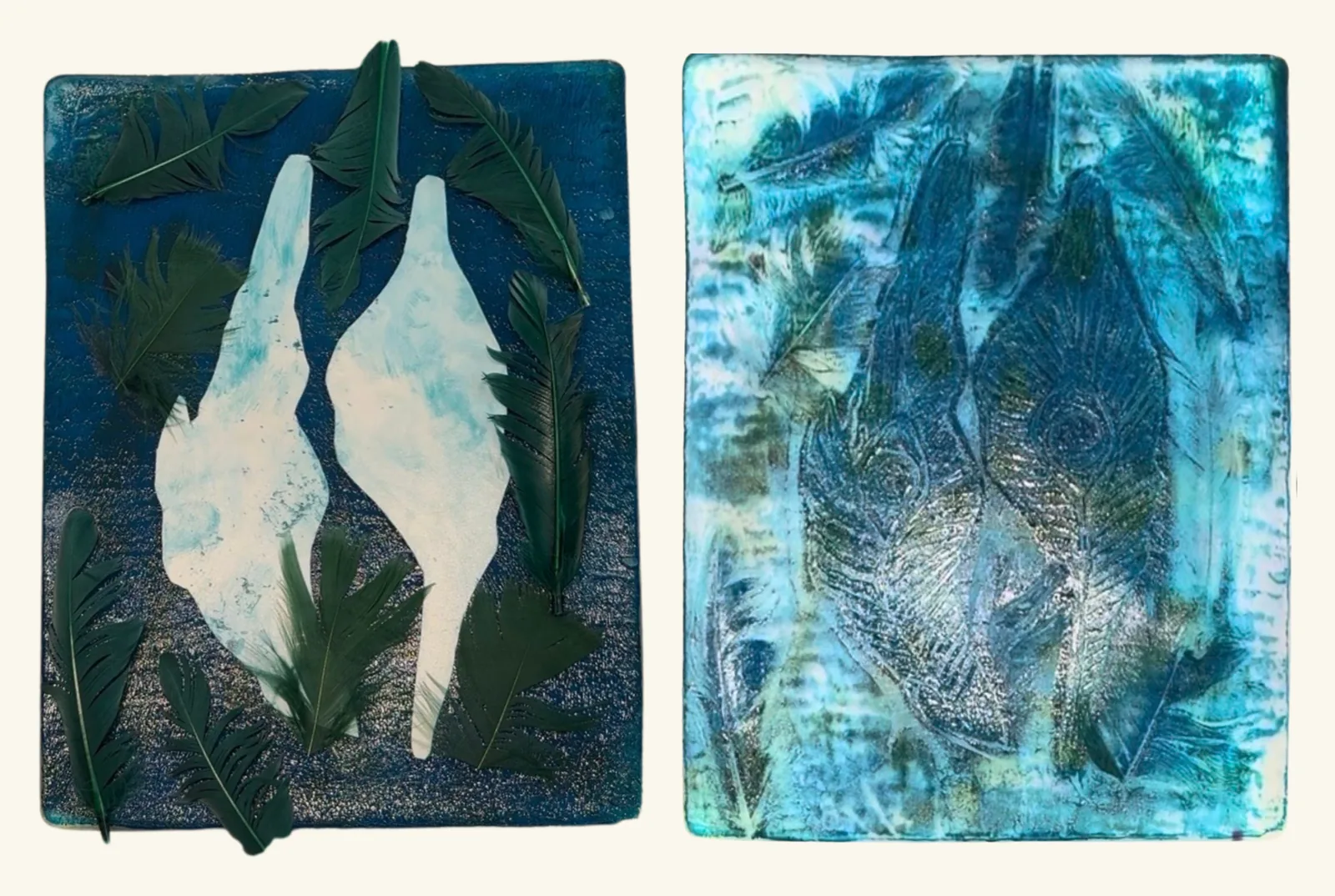
7. Feathers and Pampas Grass
Unlike hard objects, feathers and fluffy pampas grass are incredibly light and ethereal. They don't leave sharp, harsh lines, but rather soft, ghostly silhouettes that introduce a beautiful tenderness to the composition.
8. Embroidery Floss and Twine
Much like gauze, threads are a wonderful tool. You can use thicker embroidery floss or coarse twine, and they can be utilized in two brilliant ways.
For texture, press them into the wet paint to leave behind their fine, subtle tracks.
As a mask for negative space, arrange them on the plate, lay your paper down, and pull the print. When you lift the threads, they leave clean silhouettes perfectly prepared for your next layer.
9. Textured Paper
The more textured the paper, the better it transfers its unique structure. The secret here is to use a minimal amount of paint on the gel plate. If your layer is too thick, the paint will flood the grooves of the paper, and you will lose those fine, subtle details.
10. Flowers and Plants
Of course, despite all these wonderful alternative materials, I will never stop talking about my love for real flowers and leaves on the gel plate. Botanical prints hold a very special place in my creative process. The delicate veins of a leaf or the intricate silhouette of a petal offer a timeless, organic contrast that beautifully complements the abstract, everyday textures mentioned above.
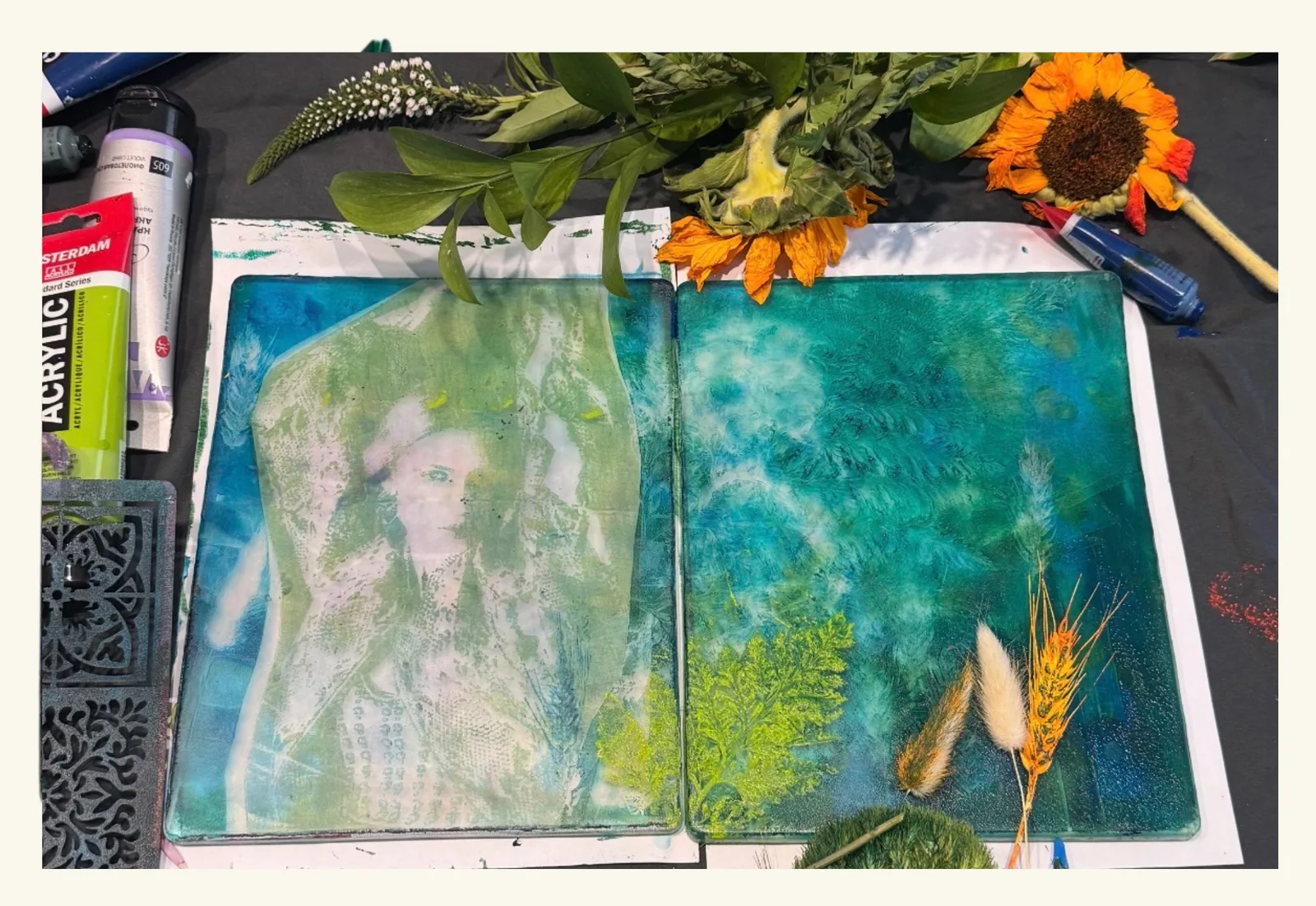
If you want to dive deeper into botanical printing and see how I use nature to create my favorite pieces, check out my dedicated post here.